
Column: Parfitt-Smith On Trauma & More
 [Opinion column written by Michaele Parfitt-Smith]
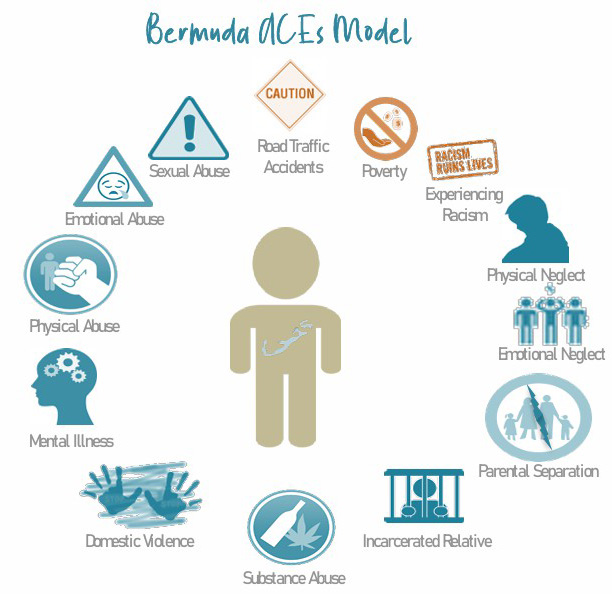
In Bermuda, trauma is more than a personal struggle; it’s an epidemic that affects our healthcare, our workforce, our justice system, and our education system.
The collaborative work on ACEs between Dr. Stephanie Guthman of The Family Centre and Tara Hines of the Bermuda Health Council began in 2018 with one goal: “to inform Bermuda of the state of our overall health.” This month’s blog explores how unresolved trauma is silently draining resources and what this means for Bermuda’s future, using data collected from this important research.
What Are ACEs?
ACEs stands for Adverse Childhood Experiences. Interestingly, ACEs research did not originally begin as a study on children—it began at an adult obesity clinic in the United States.
Dr. Vincent Felitti, head of that clinic, followed up with patients who had dropped out of the weight-loss program. He discovered that a majority—55%—had experienced child sexual abuse. Many shared similar patterns of weight gain, not just as a matter of diet, but as a response to trauma.
This breakthrough led to the first large-scale ACEs study, conducted by Kaiser Permanente and the CDC with over 17,000 participants. The data revealed a powerful truth: experiences of abuse, neglect, and household dysfunction in childhood directly shape health outcomes in adulthood.
The findings showed that trauma:
- Disrupts early brain development.
- Compromises the nervous system.
- Weakens the immune system.
- Impairs cognitive, social, and emotional functioning.
In short: the more ACEs a child experiences, the higher their risk of poor health as an adult—from chronic illness to mental health struggles, addiction, and even premature death.
The Bermuda Reality
The long-term effects of unresolved trauma put Bermuda, a small island community, at tremendous risk. We are already experiencing the consequences of not addressing these social ills.
Bermuda’s history of intergenerational trauma has normalized unhealthy beliefs and behaviors. Phrases like “What happens in this house, stays in this house” or “A child should be seen and not heard” reflect a culture of silence that allows trauma to pass unchecked from one generation to the next.
Trauma in Bermuda is not rare—it’s widespread and deeply rooted.
The Economic Burden
Health expenditure alone in Bermuda accounts for 12% of the country’s GDP every year—over $700 million. This is one of the highest per-capita healthcare costs in the world for such a small population.
According to ACEs economics, even a 10% reduction in ACEs prevalence could account for Bermuda’s entire annual healthcare budget in just one year.
Imagine what we could do with those resources. A 10% shift could free hundreds of millions of dollars to reinvest into affordable housing, education, prevention programs, and early intervention.
Unresolved trauma is quietly draining our resources while we continue to ignore the root causes in our community.
Investing in Healing
The research is clear: these outcomes can be prevented.
- In California, research into substance abuse treatment showed that for every $1 invested, the state saved multiple dollars in long-term healthcare and justice costs.
- The same is true here: investing in trauma-informed care, prevention, and early intervention would pay Bermuda back many times over.
How Can Bermuda Fix This?
Bermuda needs bold policy changes and community-driven initiatives to break the cycle of trauma. Some steps include:
- Continuing and expanding local ACEs research.
- Investing in prevention programs like EmPowerMe Bermuda and Family Forum.
- Implementing trauma-informed training in schools, the judicial system, law enforcement, and workplaces.
- Shifting national focus from reactive “band-aid” solutions to proactive healing and prevention.
Not only is this compassionate—it is economically wise. If we want to secure a healthier, more resilient Bermuda, we must invest in the generations coming behind us.
A Call to Action
Change begins with us.
- Show up.
- Support each other without judgment.
- Get involved with community resources
- Be part of the movement to break cycles of trauma.
Unresolved trauma is costing us more than we can afford—but healing can give Bermuda a brighter, stronger future.
EmPowerMe Bermuda — empowermebda.com — is a free peer-led support group for women whose focus is on actively healing from trauma. By providing a safe space through a partnership with the Women’s Resource Center, our goal is to build community, grow together, heal together and empower ourselves to break the intergenerational trauma in our community.



Right to the point. An easy read that sums up the issue. Good suggestions. We look forward to progress.
Thanks for sharing this and raising the awareness of trauma in Bermuda. Having worked in social work, the criminal justice system and education, trauma is prevalent and more widespread than what is thought.
Amazing study
Me hope is the Finance Minister adheres to these suggestions and initiatives along with removing the veil off historical taboos.
Many have suffered from these ailments and too long have been ignored or forced to cope with their trauma (like everyone else)
All the best ACE