
Column: Dommonique DeSilva On Education
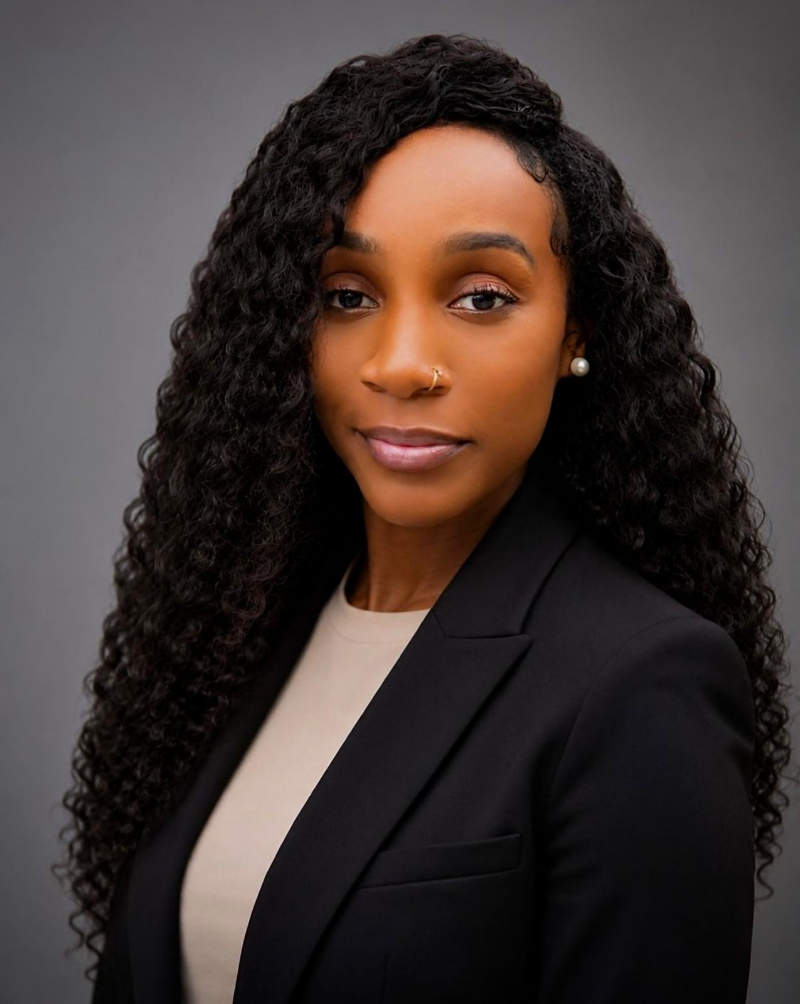
[Opinion column written by Dommonique DeSilva]
“Get an education because it’s the one thing no one can ever take from you.”
My father said those words throughout my childhood. At the time, I didn’t understand that he was giving me more than advice. He was giving me a philosophy for life.
From as young as Primary 2, I remember it being me, my youngest sister, and my oldest sister. My mother wasn’t ready to raise children, and my father made the selfless choice to raise us.
He taught us how to cook and clean, how to carry ourselves as young ladies, and, above everything else, the value of education.
There were things I struggled with in school that he could not teach me. But that was never a reason to give up. He found me a tutor.
Whenever I said, “I can’t,” he made me write:
“I can. I can do it.”
Looking back, I understand that he was building my belief in myself.
Years later, when I encountered Lev Vygotsky’s work on learning through relationships, language, culture, and guided support, I found language for something I had already experienced.
Before I understood the theory, I had lived it.
My father was my first educator. My teachers were educators. My tutor was an educator. And some of the most important lessons of my childhood happened beyond the classroom.
Every summer, when school closed at the end of June, my mother, who lived overseas, made sure we had library cards. We each chose at least three books we liked, and when we finished them, we gave her a book report.
She was teaching us that education did not stop when school ended. She was planting seeds.
Today, as literacy becomes an increasingly urgent conversation in Bermuda and around the world, I keep returning to those experiences.
Perhaps literacy is not simply a school issue. Perhaps it is a family issue. A community issue. An access issue. And ultimately, a global issue.
The World Bank estimates that approximately 70 percent of children in low- and middle-income countries cannot read and understand an age-appropriate text by age 10, a benchmark used to measure foundational learning.
But literacy does not begin at 10. It begins much earlier with books, conversations, language, relationships, and adults who make reading part of everyday life.
In Bermuda, the conversation is equally important.
In the 2025 Cambridge Checkpoint assessments, public-school primary students averaged 20 in English, compared with an international average of 33. Now, as Bermuda receives its latest Cambridge results in 2026, the conversation must continue.
Not simply about scores. Not simply about comparing Bermuda with an international average.
But about what those results are telling us and about how we are supporting children before they reach the point of assessment.
When I look at these numbers, I don’t only see test results. I see children.
I wonder when some first struggled to read. I wonder when someone noticed. And I wonder what might happen if we intervened earlier.
We also have to acknowledge the conditions in which children are expected to learn.
Imagine being a child trying to concentrate in class while eating a mayonnaise sandwich as the child beside you opens a thermos of hot spaghetti.
Then imagine going home expected to complete an online assignment when there is no internet because your parents have to choose between keeping the lights on and paying the rent.
Children do not leave their circumstances at the classroom door.
Some families struggle with food or housing insecurity. Some parents may have had limited educational opportunities themselves or face language barriers. Others may simply lack the resources or confidence to navigate an education system.
That does not mean those parents do not care.
It means we have to meet families where they are and give them the tools to help their children thrive.
Technology can support education, but it cannot replace relationships. Children need conversation, connection, and adults who model curiosity and perseverance.
Because children don’t only learn from what we tell them.
They learn from what they see us do.
As an educator, I have seen how a child’s basic needs can affect their ability to learn. We cannot expect children to learn without considering the conditions surrounding them.
We cannot solve every educational inequality overnight.
But we can begin planting seeds. Pick up a book tonight. Read to your child. Let your child choose the story. Ask questions. Visit a library. Let your child see you reading.
Literacy Does Not Recognize Borders
A child in Bermuda matters. A child in the United States matters. A child in the Caribbean matters. A child in Africa matters. A child in Asia matters.
The circumstances may look different from country to country, but the question is the same:
Are we giving children the foundation they need to learn?
Literacy does not recognize borders.
Language, culture, poverty, migration, technology, and educational opportunity may look different across countries, but children everywhere deserve the opportunity to learn, communicate, and participate fully in their communities.
This is why literacy must be treated as more than an education-system issue. It is a global issue.
My father planted seeds in me long before I understood what they would become.
He literally crawled so we could run. And my son? He will fly.
Perhaps the question is not only:
“What is happening inside our classrooms?”
Perhaps we should also ask:
“What are we planting outside of them?”
A library card can be a seed. A book can be a seed. A parent can be a seed. A teacher can be a seed. A community can be a seed.
We may never know which seed becomes the turning point in a child’s life. We plant anyway.
One conversation. One story. One child. One opportunity. One seed at a time.
Because we may not change the world overnight, but we can change one child’s world today.
- Dommonique DeSilva is a Bermudian educator, community advocate, literacy champion, and founder dedicated to helping children and families learn, grow, and recognize their potential.


Good day Mrs. DeSilva. I truly appreciate your opinion on education in Bermuda. Parents as well as grandparents play pivotal roles in the lives of our children some good and some not so good. We have to highlight the good more frequently. We need to encourage children that they have greatness in them and that they can do anything they set their minds to.
So thank so much for being vulnerable and sharing part of your journey. God bless
Sincerely
R. Allan Vallis
Thank you so much for this beautiful message. I truly believe our children need to hear more often that there is greatness within them. Sometimes, all it takes is one person believing in them and reminding them of who they are. Thank you for reading, for understanding my vulnerability, and for adding your voice to the conversation. God bless you. ???????? And if you’d like to follow along, I’d love to have you join me on a little journey I’m taking with a very special bluebird named Lio.