
New Research On Bermuda’s Spiny Lobsters
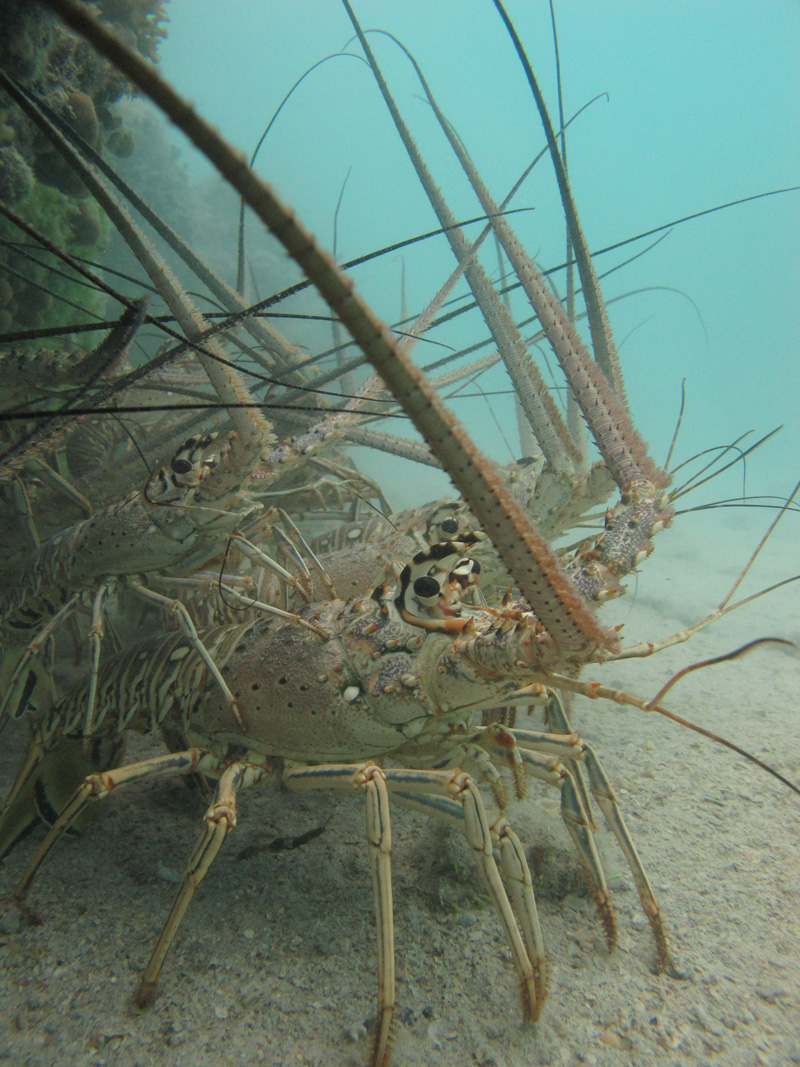
The Department of Environment and Natural Resources [DENR] and the Bermuda Institute of Ocean Sciences [BIOS], part of Arizona State University, are highlighting their recent collaborative research into factors affecting Bermuda’s spiny lobster fishery.
A spokesperson said, “The results could help Government better anticipate changes affecting the lobster population and support the long-term management of this important local fishery.
“Published in Communications Earth & Environment, the study was led by ASU BIOS researcher Leocadio Blanco-Bercial in collaboration with DENR’s Marine Resources staff. It brought together DENR’s long-term fisheries records, satellite data, and ocean observations from the Bermuda Atlantic Time-series Study [BATS] at ASU BIOS, and examined how conditions in the wider North Atlantic Ocean affect the number of young lobsters reaching local waters.
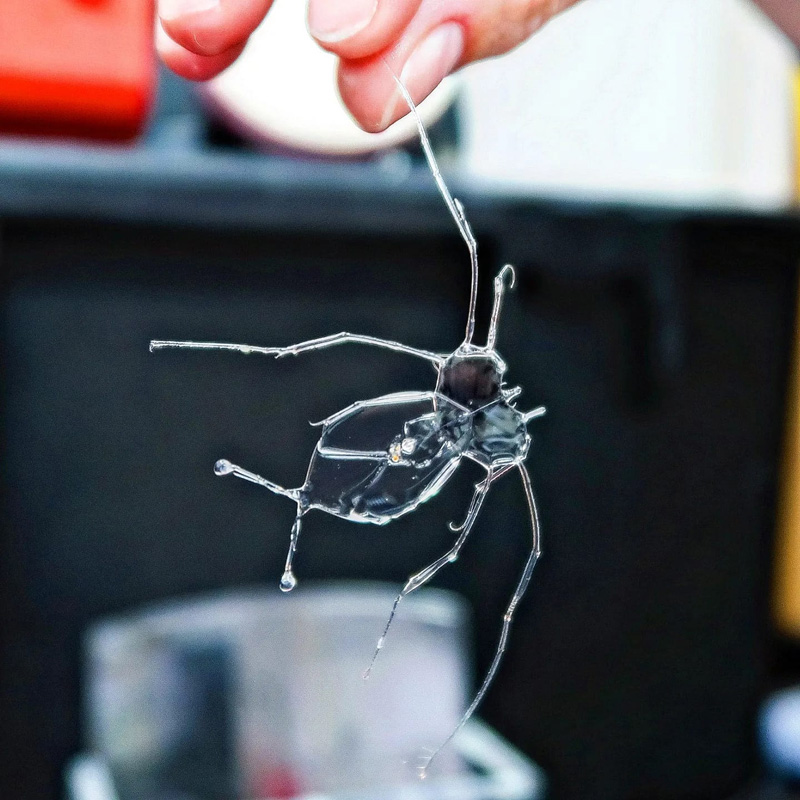
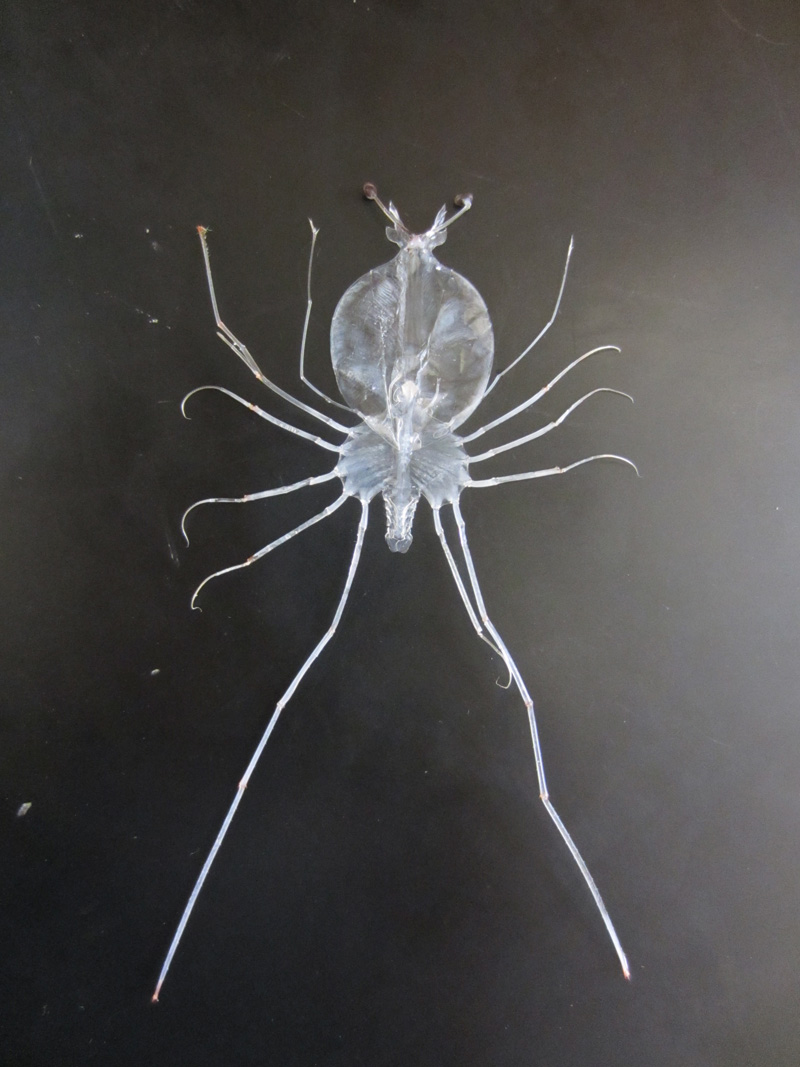
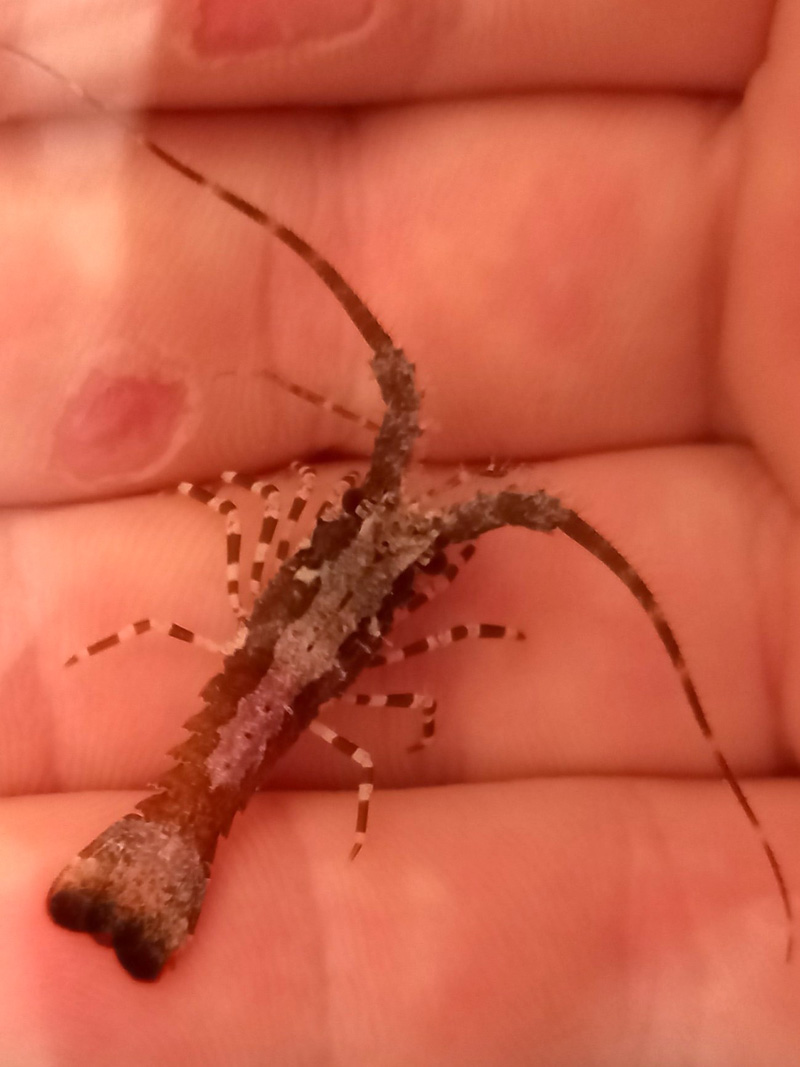
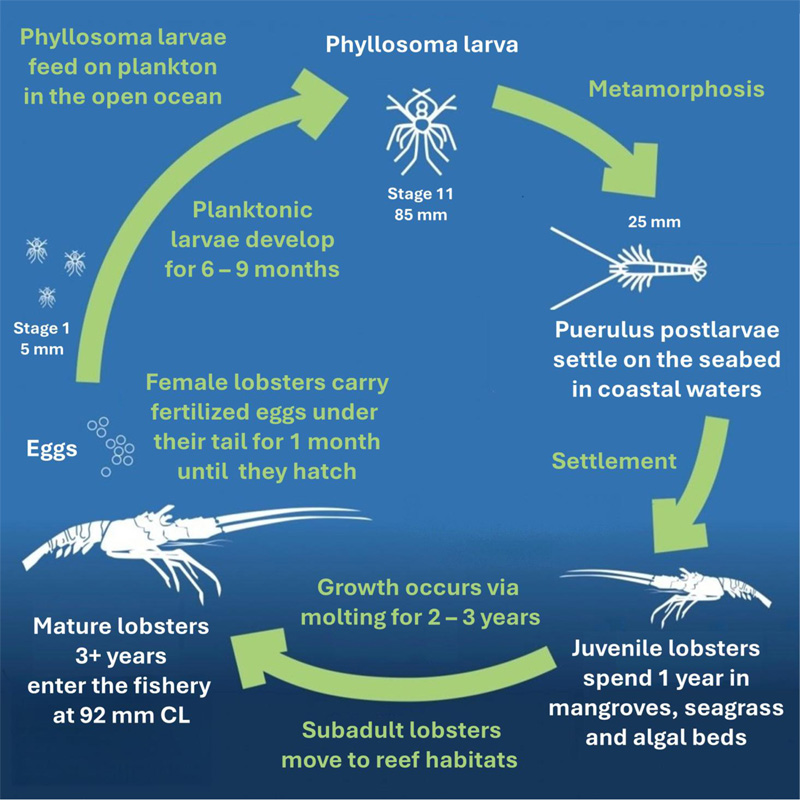
“Bermuda’s lobster catch has declined over the past decade despite longstanding management measures that support fishery sustainability, including protections for breeding females and juvenile lobsters. However, lobster larvae spend nine months in the open ocean before the juveniles settle in coastal habitats. Local regulations cannot protect these larvae, and their survival depends on favorable ocean conditions and finding enough plankton to feed on.
“By combining the three sets of data, researchers developed a new way to track changes in ocean conditions and the plankton food chain and link those changes to the supply of larvae available to replenish Bermuda’s spiny lobster population. This new index explained changes in lobster catch rates better than predictions based on previous catch levels, ocean temperature, or other available environmental measures.”
Minister of Public Works and Environment Jaché Adams said, “Bermuda’s fisheries are important economically and culturally, and we have a responsibility to ensure they are managed sustainably for future generations. Research like this gives us a better understanding of how wider changes affect our local marine environment and provides our technical team with additional information to help manage our resources.”
Lead author Blanco-Bercial, associate professor in the ASU School of Ocean Futures, noted that the most exciting aspect of the work is “combining data from Bermuda’s fishermen and fisheries with long-term observations from BATS and satellite imagery.”
The spokesperson said, “The study demonstrates how collaboration between Government, scientists and Bermuda’s fishing community can leverage decades of scientific, environmental and fisheries data to create a practical tool that assists resource managers.”
“Sustainable fisheries management depends on understanding not only what is happening within the fishery, but also the environmental conditions that affect our fishery species,” said Dr Tammy Warren, senior marine resources officer at DENR. “As our ocean changes, integrating different types of evidence will become increasingly important to making informed management decisions.”
The spokesperson said, “The new index can help the Department identify changing conditions earlier and consider appropriate management responses.”
Joanna Pitt of DENR said, “Most fishery monitoring is based on looking at changes in the catch after those changes have happened. The major benefit of this index is that it can give us some advanced warning of changes that are affecting the early life stages of the spiny lobster, so that we can be prepared to adjust our management approaches.”
The spokesperson said, “The complex life cycle of the spiny lobster presents a variety of management challenges. The new index is therefore not intended to replace existing fishery monitoring or management tools, but can complement current approaches, improve forecasts, and support more ecosystem-based fisheries management.
“Read the full scientific article here. The work was funded by a Simons Foundation International grant administered by the Simons Foundation.”


Read More About
Category: All, Environment, News


How about collecting and raising the larvae in tanks until they reach a certain size, and then releasing them? No doubt that would increase the life expectancy of the larvae and bump up the lobster population. Lobster breeding?
The authors failed to have ChatGPT review the paper for errors, omissions, and weaknesses. The actual research is about 15 or so pages out of 22 pages. Summary of the gotchas in the research paper.
ChatGPT ranking of the problems
Critical
1. TI does not clearly outperform persistence in the actual EFM forecast.
2. Four-year moving average is inconsistently constructed.
3. Temporal alignment/forecast horizon is insufficiently specified.
4. Potential leakage/look-ahead bias needs to be ruled out explicitly.
5. Strong temporal trends and autocorrelation are not adequately addressed.
6. The analysis lacks a trend/autoregressive benchmark.
7. CPUE is treated as abundance despite strong assumptions about catchability.
8. Recreational catch versus trap effort requires clarification.
9. The ecological mechanism from regional NBSS to lobster recruitment is not directly demonstrated.
10. The fixed environmental box does not adequately represent larval transport pathways.
Major
11. Selection of only statistically significant NBSS slopes.
12. Lack of uncertainty propagation from NBSS into TI.
13. Inadequate specification of the Bayesian model.
14. No independent validation.
15. No formal statistical comparison of forecast performance.
16. Small effective sample size.
17. Four-year averaging assumes equal biological importance across life stages.
18. Trap selectivity and size structure are insufficiently addressed.
19. Spatial fishing effort is collapsed into one annual CPUE.
20. The paper overstates the interpretation of NBSS as trophic efficiency.
Moderate
21. Day/night slope averaging requires justification.
22. Broad >5 mm size category.
23. BATS spatial representativeness.
24. Environmental reanalysis uncertainty.
25. Insufficient distinction between recruitment, abundance and CPUE.
26. Several inconsistent statistical terms.
27. Editorial/reference problems.
Bottom line: ChatGPT says:
>>> I would not recommend accepting the paper in its present form without substantial methodological revision. <<<
Talk about overthinking it. Commercial fisherman can place pots on the platform, when they used to have to put them over the edge. They can also do so 1 week before recreational season and 1 week after. There’s your reason.