
HSBC Bank Helps Seniors Identify Scams
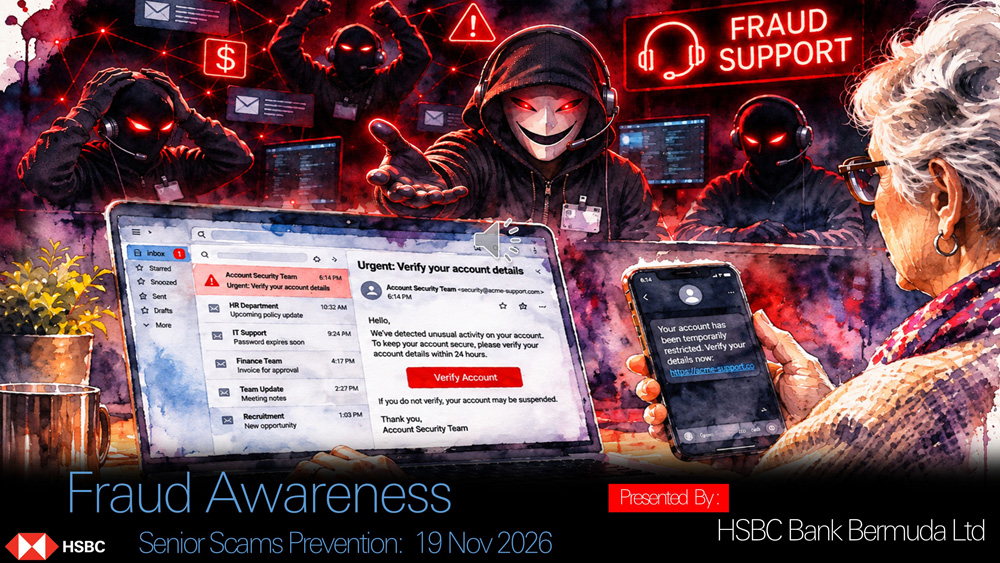
HSBC Bermuda hosted two workshops to educate seniors about financial scams, highlighting the importance of staying vigilant and reporting suspected fraud without delay.
A spokesperson said, “Embarrassment is helping fraudsters steal money and preventing them from being caught, seniors were told during bank workshops on financial crime.
“At two workshops hosted by HSBC Bermuda, seniors were urged to report suspected fraud quickly and pause before responding to unexpected calls, messages or requests for money.
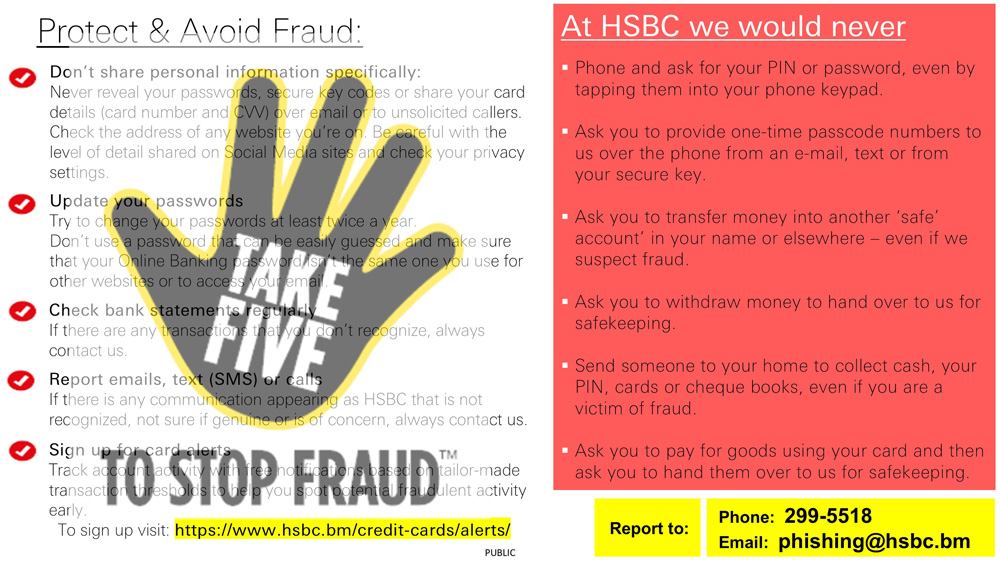
“They were also told never to give information such as one-time codes or their PIN to anyone, as the bank would never ask for those details.
“Sarah D’Alessio, programme manager for the Government’s Ageing and Disability Services, who spoke at the workshops, said people often stayed silent after being targeted because they felt ashamed.
“That delay could reduce the chance of recovering money and prevent banks and police from warning others about an active scam, she said.”
“There is no shame in being scammed. The shame is on the scammer,” Ms D’Alessio said. “The sooner you report, the greater the likelihood that you might have an opportunity to recover those funds if they haven’t gone anywhere.”
She added that reporting was also essential to stopping scams from spreading.
“You’re making sure that the banks or the police are aware of a scam that’s occurring, so they can notify other people and stop it from happening elsewhere,” said Ms D’Alessio.
The spokesperson said, “The workshops covered areas such as vishing, or voice phishing, phishing, impersonation scams, password security and financial exploitation.
“The bank also encouraged participants to avoid sharing passwords, personal information or security codes and to use strong passwords that are not based on birthdays, pet names, addresses or other publicly available details.
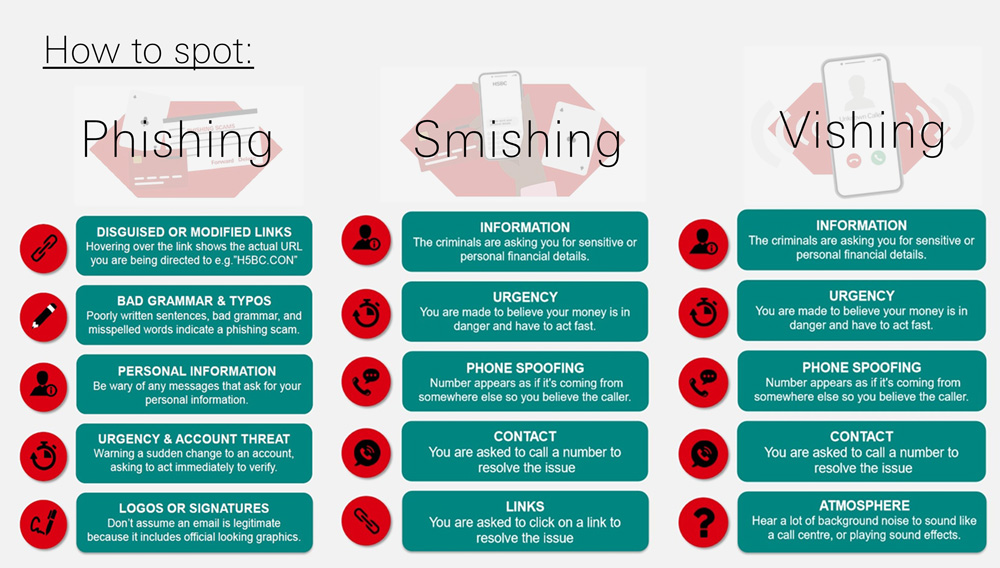
“Participants were tested with realistic examples, including a fake delivery text, a caller threatening to disconnect a service unless payment was made immediately, and a message from a friend asking for a six-digit security code.
“Ms D’Alessio said urgency was a central warning sign.”
“Pause and verify,” she urged. “Slowing down helps you not act out of emotion, which the fraudsters are relying on. Just hang up or don’t respond; you always have time to verify the issue first.”
The spokesperson said, “The sessions also addressed scams that exploit trust and generosity. Ms D’Alessio described cases in which fraudsters posed as church members, pastors or online friends before asking for money.
“She said people should verify any unusual request by contacting the person directly through a known number or in person.
“HSBC held the workshops as part of its contribution to the continuing effort to raise awareness of scams and give seniors practical ways to protect themselves.”
Wayne Pimentel, Head of Financial Crime Risk Management at HSBC, said: “The message from Sarah is clear: pause before you act.
“If a call, text or online message creates pressure, asks for personal information or seems out of character, take time to check it.
“Speak to someone you trust if you’re unsure and report anything suspicious as soon as possible. Asking for help is a sensible step, not something to feel embarrassed about.”
The spokesperson said, “The workshops also covered enduring powers of attorney and the risks of adding another person to a joint bank account. Ms D’Alessio said people should take independent legal advice and choose carefully when putting arrangements in place to manage their finances.
“The central message was simple: pause, check and report. A moment’s hesitation can make it harder for a scammer to create urgency, while prompt reporting can help alert others before they are targeted.”
The workshops took place on November 19th.


Read More About
Category: All, Business, technology


