
Bermuda College Adds Friendly Societies Course
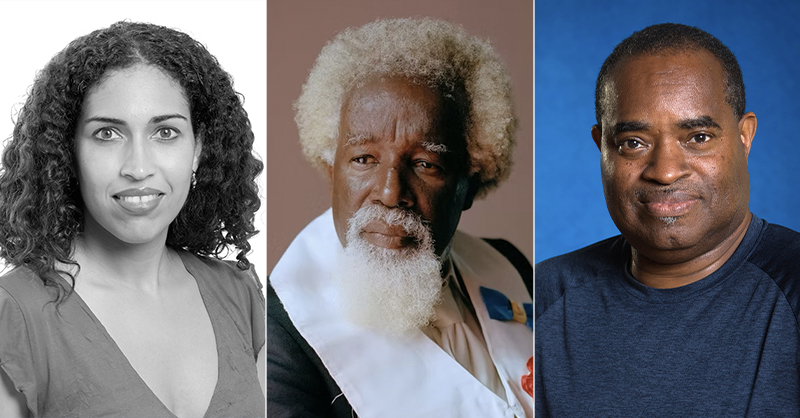
Bermuda College is expanding its academic offerings with a new course exploring the history and lasting impact of Bermuda’s Friendly Societies, with Dr. Michael Bradshaw, Dr. Kim Dismont-Robinson and Cordell Riley “combining perspectives that encourage students to consider not simply what happened in Bermuda’s past, but how that past continues to influence the island today.”
A spokesperson said, “Bermuda College is expanding opportunities for students and the wider community to explore Bermuda’s own history, culture and social development through a credit-bearing history course examining the important role of the island’s Friendly Societies.
“Offered this Fall through HIS 2298 – Special Topics in History, the three-credit course uses the story of Bermuda’s Friendly Societies as a lens through which students can examine the people, communities and institutions that helped shape modern Bermuda.
“The inclusion of the Friendly Society studies within the College’s academic offering was made possible under the leadership of Bermuda College President Dr. David Sam, with Dr. Ali Arouzi, Vice President, Academic Affairs, spearheading its inclusion within the curriculum. The course is offered through the Division of Arts & Science, led by Dean Dr. Dwayne Thompson.
“The initiative represents more than the exploration of a single chapter in the island’s history. It reflects a broader vision of bringing distinctly Bermudian subject matter into the academic environment, creating opportunities for students to examine their own community through research, critical inquiry and multidisciplinary study.
“Friendly Societies have played an important role in Bermuda’s social development, providing mutual support within communities and contributing to areas including social welfare, education, economic participation and community development. Their history also provides a point of connection to wider discussions around culture, identity, race, economics and the evolution of Bermudian society.
“The course brings together Dr. Michael Bradshaw, Dr. Kim Dismont-Robinson and Cordell Riley, JP, combining perspectives that encourage students to consider not simply what happened in Bermuda’s past, but how that past continues to influence the island today.”
Dr. Michael Bradshaw said, “The motto of the Bermuda Friendly Society Association is ‘Strength in Unity’. This seemingly simple statement speaks with a grand voice to the complex situations and events that encompass our post-Slavery Bermudian society. We need to understand all of our past to be enabled to better analyse and prepare for the current and the future.”
Dr. Kim Dismont-Robinson said, “This course provides an opportunity for students to engage with Bermudian history and culture in a way that integrates their experience of being members of our community with a deeper understanding of how the events of the past have shaped our present. Examining the history of Bermuda’s Friendly Societies alongside elements of the wider environment including the publication of Mary Prince’s narrative help to tell a story about emancipation, collective responsibility and resilience that will hopefully resonate with the contemporary paths being charted by our students.”
Cordell Riley said, “Friendly Societies laid the foundation for not only the development of the formally enslaved but also for the development of Black businesses in general. This section of the course explores the link between the early work of Friendly Societies and the development of the tourism industry with Blacks as both service providers and consumers.”
A spokesperson added, “The introduction of Friendly Society studies also opens the door to a much broader academic conversation at Bermuda College.
“The subject naturally intersects with disciplines including history, sociology, philosophy, political science and economics, creating opportunities for future courses, research and community learning. Supporting materials developed around the initiative identify the Friendly Society story as a potential framework from which a wider, multidisciplinary Bermuda Studies offering could ultimately evolve.
“Such a concept could draw together academic study and research centered on subjects of particular relevance to Bermuda, while also creating opportunities for collaboration with local organisations, researchers, educational institutions and heritage partners.
“The vision also extends beyond traditional credit courses. Future possibilities identified through the initiative include non-credit courses, workshops and experiential learning opportunities that could make Bermuda-focused education accessible to schools, organisations and members of the wider community.
“For Bermuda College, this expanded focus supports its role not only as an institution preparing students for further education and careers, but as a community resource through which Bermuda’s history, knowledge and experiences can be studied, preserved and shared.
“HIS 2298 – Special Topics in History is held on Wednesdays at 6:00 p.m. in Room G301 at Bermuda College. The course carries three credits and, as a 2200-level credit course, applicable prerequisites are required. The opportunity is also open to members of the wider community, who may audit the course and engage with this important part of Bermuda’s history without pursuing academic credit.
“For more information about this course, the Bermuda College and its academic programmes, visit www.college.bm or email: readytostart@college.bm.”


Not a bad idea. Friendly Societies still exist in Bermuda, but they are not well understood.
But these are 3 very hard working intellectuals whose lectures should be captured on film. What took them so long. As late as 1990 they could easily have had 100 giants from the lodges to talk. Get going now before more pass.