
Column: Creary On Screen Time & More
[Opinion column written by Gwendolyn de la Chevotiere Creary]
I’m going to say my opinion plainly: ideally, infants and young children wouldn’t be exposed to devices and digital media at all – not because screens are “evil,” but because early development is built on things screens can’t deliver the same way: real faces, real voices, real back-and-forth, real play, real repair. Many parents I speak with in Bermuda ask the same question: how do we raise young children in a digital world without losing the connection they actually need to grow?
But we also live in the real world of everyday families. Many parents use devices constantly [because life is digital], and many are parenting with less day-to-day support from close family – sometimes because relatives live overseas, sometimes because work schedules are intense, sometimes because community ties have changed. In that reality, expecting “zero exposure” for every baby and toddler may be unrealistic. So, the goal becomes: protect connection, protect routines, and build family and learning environments where screens don’t become the default.
The American Academy of Pediatrics has begun shifting the conversation in this direction as well – encouraging parents to think not only about minutes of screen time, but about the broader digital environment and what screens may be replacing.
Babies and young children develop through people, not pixels
In the first years of life, children’s brains are shaped by “serve-and-return” – the child looks, babbles, fusses; the adult responds; the child tries again. That’s how language, self-control, and social understanding get built.
Much of ParentGuide’s work with families and early childhood educators in Bermuda focuses on supporting these everyday relational moments that build a child’s foundation.
When I talk with parents, they rarely need a lecture. They describe it themselves: the toddler who can’t transition off a tablet without a meltdown, the bedtime battles after a show, the “quiet” that feels like relief – until you realise the day had fewer cuddles, fewer conversations, fewer chances for a child to practice boredom, waiting, or imaginative play.
Screens can quietly reshape the parent-child relationship
Here’s the piece we don’t say out loud enough: screens affect children indirectly through adults. When a phone constantly pulls our attention, children lose tiny moments of being seen and soothed. Those micro-moments are how children learn, “I’m safe. I matter. Someone is with me.”
The reality is that many digital tools are designed to keep our attention. That can make staying present harder – especially when you’re tired, stressed, or doing it without much help.
Are screens ever “good” for young children?
Yes – sometimes. I’m not anti-technology. Video chatting with grandparents can be meaningful. Short, high-quality content can support learning when an adult is beside the child making it interactive: “What do you see?” “Tell me what happens next.”
In the work I do with families, the goal isn’t to eliminate technology but to help adults use it intentionally, so it supports connection rather than replacing it.
But the trade-off is real. The more screens fill the gaps, the fewer gaps remain for the things that build a child from the inside: movement, mess, pretend play, conversation, sibling squabbles [and repair], and the deep regulation that comes from a steady routine.
Screens in educational settings
In early childhood programs, screens can be a tool – briefly, purposefully – like a short clip that sparks a hands-on activity or conversation. But when screens become the default filler, the risk is that they displace what early childhood settings do best: child-led play, peer interaction, sensory exploration, and attuned adult support.
Through consultation and training, ParentGuide works with both families and early learning settings in Bermuda to help keep those experiences at the centre.
Practical guidelines for parents and caregivers [doable in real life]
One helpful framework encourages parents to think about the child, the content, what screens may be crowding out, and how children learn to calm themselves.
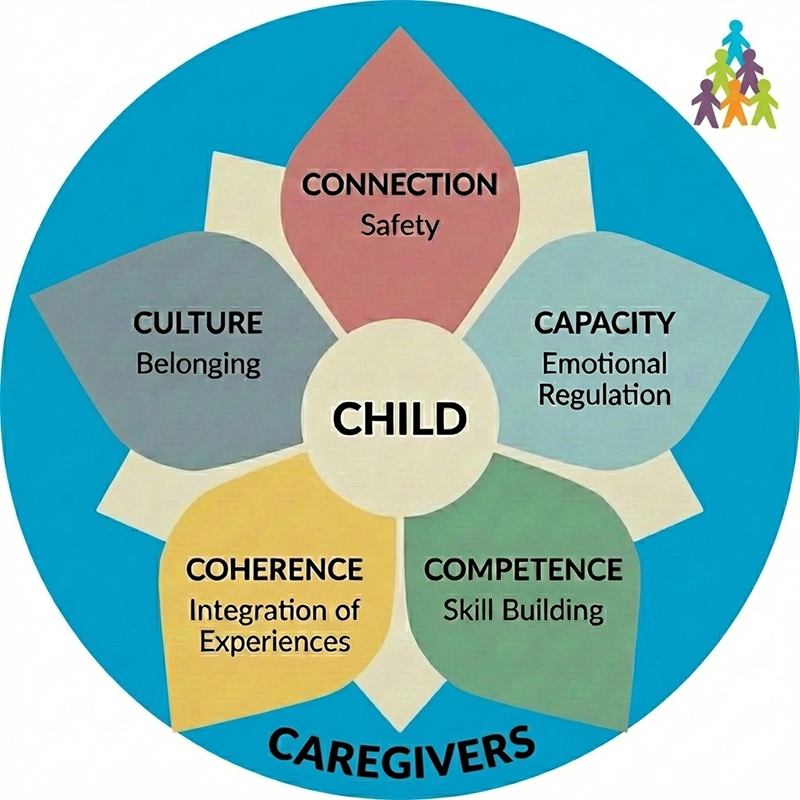
Here’s how that can translate into daily life in Bermuda:
Protect the anchors [non-negotiables]: meals, bedtime routine, outdoor play.
No background screens [at home or in care]. If it’s on, it should be intentional.
Co-view when possible: “with you, not instead of you.”
Don’t make screens the main calming tool: build a small “calm menu” [cuddle + breathing, sensory play, music, movement, book, warm bath].
In childcare or preschool, keep screens rare, brief, and tied to hands-on learning – not behaviour management.
Be cautious with AI “talking” toys: avoid anything that requires Wi-Fi/apps, uses a microphone/camera, or markets itself as a “companion.”
Create one daily “pocket of presence”: even 15-20 minutes of phones-away connection.
A balanced conversation
Parents often ask whether screens are contributing to rising anxiety or attention difficulties in children.
Development is influenced by many factors – sleep, stress, temperament, learning needs and family routines among them.
What research increasingly suggests is that heavy, unstructured screen exposure can amplify risk factors, particularly when it crowds out sleep, movement and real connection.
Protecting what Bermuda does best
Bermuda’s protective advantage has always been community – multi-generational relationships, neighbourly care, outdoor life, and belonging.
ParentGuide’s mission is to support the adults around children – parents, caregivers and educators – so those protective relationships remain strong.
Screens can support families in small ways. But for babies and young children, connection is the curriculum.
If Bermuda continues to prioritise relationships, play and community support in the early years, we will be investing not only in individual children, but in the long-term wellbeing of our whole community.
- Gwendolyn Creary, Infant and Early Childhood Mental Health Consultant and founder of ParentGuide



Read More About
Category: All, technology


Thank you for this article for your insight and impartiality. I hope your message reaches those who are in need of this help and spreads like wildfire.
A brilliant piece