
Column: O’Brien On Hospital, Housing & More
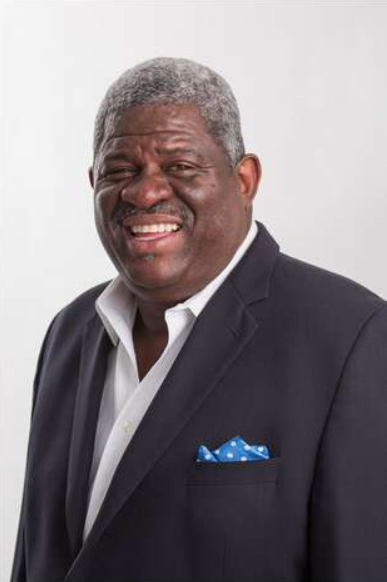 [Column written by Charles Leon O’Brien Sr]
Bermuda’s hospital overcrowding problem is not simply a hospital problem. It is a long-term care problem, a home-care problem, a rehabilitation problem, a housing problem, a family-support problem, and ultimately a national resilience problem.
Too many people are ending up in hospital, or remaining in hospital, because there is nowhere else for them to safely go.
Some patients are medically fit to leave acute hospital care but cannot return home because they require supervision, physiotherapy, mobility assistance, medication management, wound care, or support with daily living. Others require rehabilitation or skilled care, but not necessarily an acute hospital bed. The result is that beds designed for emergencies and serious medical conditions become occupied for extended periods of time, placing pressure on emergency services, staff, patients, and families across the island.
This conversation must now move beyond politics and blame.
The reality is that many families would gladly take loved ones home if they had the proper support system to do so. But wanting to care for a family member and being financially or physically able to do so are two different things entirely.
At current rates, skilled home care can cost approximately $35 an hour. Twenty-four-hour coverage can exceed $300,000 a year. Even partial daily coverage can cost more than many families can realistically afford. Some households are already supporting children, paying mortgages or rent, working full-time jobs, and attempting to manage their own financial and emotional pressures.
We cannot force families to take loved ones home when Bermuda has not yet built the support system to make home care safe, affordable, and sustainable.
This is why Bermuda urgently needs a National Patient Flow and Long-Term Care Relief Plan — one that looks at the entire continuum of care rather than focusing solely on hospital beds.
The issue requires a bird’s-eye view.
Bermuda must examine acute care, long-term care, rehabilitation, home-care support, physiotherapy, respite services, senior housing, adult day programmes, discharge planning, wound-care support, and community-based primary care together as one interconnected system.
At the moment, too much pressure is being carried inside the hospital itself.
One of the strongest models Bermuda should examine is the home-support approach used in countries such as St Lucia. In that model, vulnerable seniors and medically dependent individuals receive structured support within their homes, including medication assistance, housekeeping, meals, companionship, personal care, and monitoring throughout the day.
A Bermuda version of this programme could provide daytime assistance for seniors and medically vulnerable residents while supporting families who are trying to keep loved ones at home safely.
This would not replace families. It would strengthen families.
It would help reduce unnecessary hospital admissions, improve discharge planning, and allow more seniors to remain in familiar surroundings while maintaining dignity and safety.
The issue of rehabilitation and physiotherapy must also be addressed honestly.
Far too often, patients who have the ability to improve physically are left inactive for extended periods. Lack of movement, lack of physiotherapy, pressure injuries, bed sores, muscle contractions, and preventable deterioration become major quality-of-life issues. Patients who could potentially regain mobility, confidence, or independence should not spend months without proper rehabilitation opportunities.
Dignity in healthcare is not simply about survival. It is about movement, stimulation, cleanliness, therapy, social interaction, and maintaining a sense of purpose.
This is also why temporary overseas care partnerships should at least be discussed carefully and responsibly.
This should never be framed as abandoning Bermuda’s seniors or sending vulnerable people away. That would be both inaccurate and unfair.
Instead, Bermuda should examine whether carefully selected patients could voluntarily access temporary rehabilitation, assisted-living, or long-term care programmes overseas while local capacity is being expanded. Some overseas facilities provide structured physiotherapy, rehabilitation programmes, social activities, outings, mobility support, movie theatres, recreational activities, and environments designed specifically to keep seniors engaged and active.
Some Bermudians who relocate overseas later in life may ultimately choose to remain abroad because they find a broader support structure and more active senior lifestyle than what is currently available locally. Others may wish to return once Bermuda develops stronger systems and capacity.
The key must always be patient choice, family involvement, medical oversight, safety, and dignity.
Any overseas-care arrangement would require strict safeguards, including patient and family consent, medical suitability assessments, quality assurance, regular reviews, legal protections, and clear return pathways where appropriate. This should never replace the need to build Bermuda’s own long-term-care infrastructure. However, temporary overseas partnerships may provide breathing room while the island develops more sustainable local solutions.
Bermuda should also consider whether temporary medical-transfer partnerships could assist during periods of severe hospital overcrowding.
Not every patient requires dangerous or highly specialized intervention. Some individuals may simply require short-term monitoring, rehabilitation, observation, specialist consultation, or follow-up treatment over several days. In those cases, Bermuda could explore structured transfer agreements with carefully selected medical centres in nearby jurisdictions.
This concept would require clinical oversight, medical-transfer protocols, airline coordination, patient safety standards, family communication, insurance coordination, and formal partnerships with receiving facilities. Discussions could potentially involve BermudAir or other airlines serving the island to determine whether scheduled or standby medical-transfer arrangements could support Bermuda during peak-capacity periods.
Even the ability to temporarily relieve 10 to 20 beds during high-pressure periods could make a meaningful difference to emergency care access and hospital operations.
This is particularly important because Bermuda’s hospital system is not only serving residents. Bermuda is an international tourism, insurance, reinsurance, captive insurance, and financial-services jurisdiction. Hospital capacity is therefore part of Bermuda’s national infrastructure and emergency preparedness framework.
If a major hurricane, mass-casualty event, airport emergency, cruise-ship incident, or pandemic surge occurred tomorrow, how much hospital capacity would realistically be available?
That is not a political question. It is a national-resilience question.
BHB alone cannot solve this challenge. Government alone cannot solve this challenge. Families alone cannot solve this challenge.
This requires cooperation between healthcare providers, Government, insurers, community organizations, airlines, rehabilitation specialists, long-term-care providers, families, and the wider public.
Bermuda has reached the point where hospital overcrowding must be treated not simply as an operational inconvenience, but as a warning sign that the wider care system requires restructuring and support.
The goal should be simple:
Protect hospital capacity. Support families. Improve rehabilitation and long-term care. Preserve dignity for seniors and vulnerable residents. And ensure Bermuda is prepared before the next crisis arrives.
The island cannot afford to wait until a major emergency forces the conversation upon us.
- Charles Leon O’Brien Sr., Head Spokesperson of the Citizens Reform Group



Read More About
Category: All


I read this contribution with interest and particularly the call for further and greater intervention.
So many are literally dumped in the hospital and the interest from the family members dwindle down to zero. Many have the houses, accounts and property signed over to them as a safeguard, but almost immediately the parents become “excess baggage” and a burden, despite them in charge of all financial assets.
These family members receive pension cheques on behalf of the seniors but use the money like a personal bank account. They should NOT receive or be in charge of these funds which should be put in a separate account strictly for the hospitalized person