
Part Of Fort William Made Into Micro Forest
The St. George’s Foundation [SGF] and the Bermuda Zoological Society [BZS] have transformed an overgrown area at Fort William into a micro forest featuring native and endemic plant species as part of the BZS Micro Forest Project.
A spokesperson said, “A once overgrown area of invasive vegetation at Fort William has been transformed into a micro forest of native and endemic species, thanks to a collaborative effort between the St. George’s Foundation [SGF] and the Bermuda Zoological Society [BZS] Micro Forest Project.
“The revitalized site lies within Bermuda’s UNESCO World Heritage Site, directly in front of Fort William, a 19th-century fortification also known as the Western Redoubt.
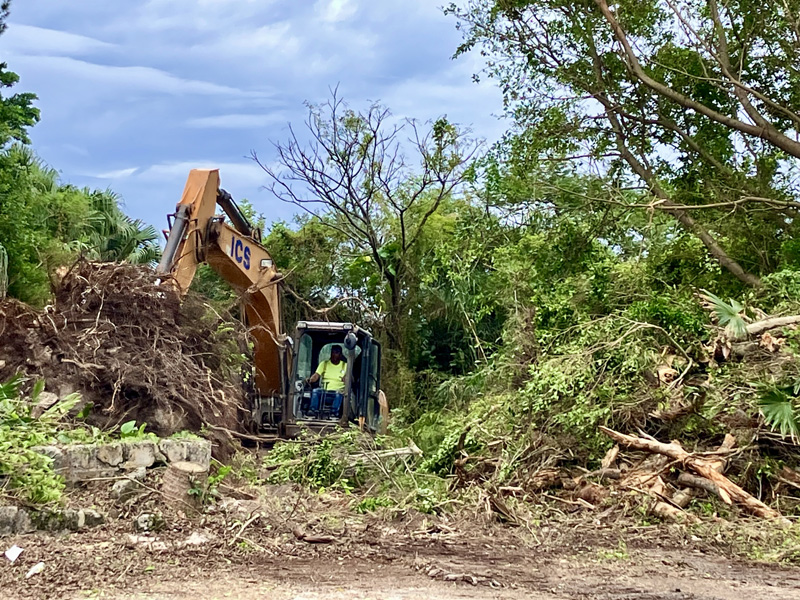
“Recognizing the rapid regrowth of invasive plants, SGF partnered with BZS to transform the cleared space into a micro forest. Preparatory work included removing roots and rocks and bringing in truckloads of soil and compost.
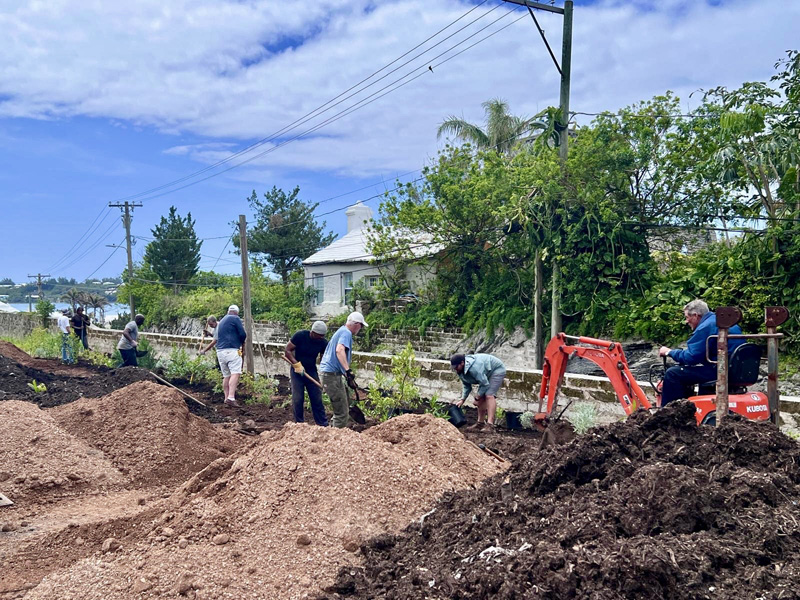
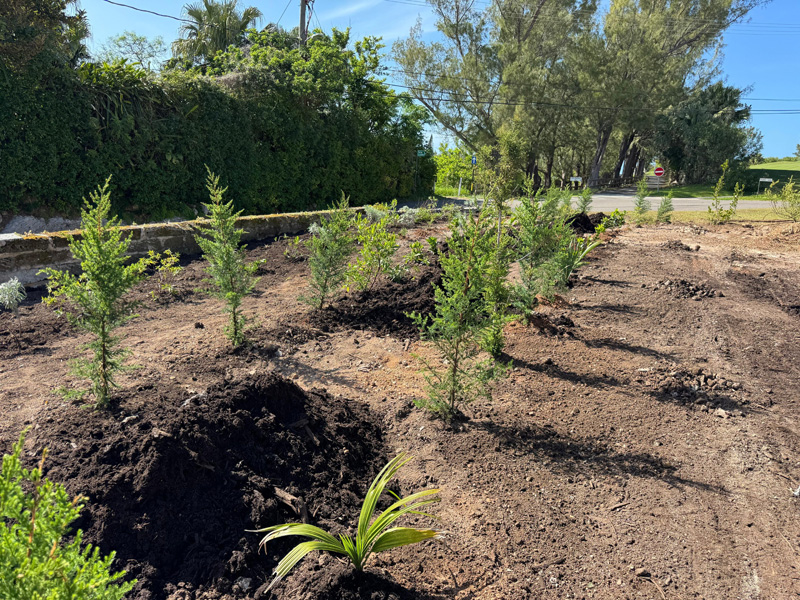
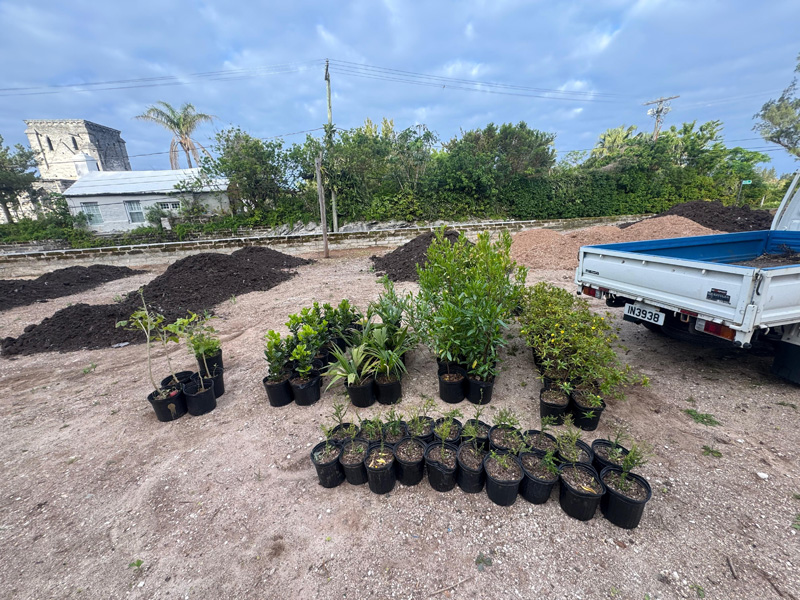
“Native and endemic species were then planted by SGF volunteers, with support from participants in the Department of Corrections Charity Work Programme in April. The planting was carried out under the direction of BZS Micro Forest Project Officer Nicholas Coelho. Native and endemic species planted included Turnera, Sea ox eye, Bay Lavender, St. Andrews Cross, Jamaican Vervain, Jamaican Dogwood, Box Briar, Tassel Plant, Bermuda Palmetto, Olive Wood, Cedar, Green Buttonwood, Southern Hackberry, and Yellowwood.”
Mr. Coelho said “The BZS Micro Forest Project in partnership with the St. George’s Foundation is a great example of how ecological restoration and cultural heritage can work hand in hand. Within this initiative, the Fort William Micro Forest plot demonstrates how invasive vegetation can be carefully replaced with native and endemic species to restore ecological function and strengthen biodiversity outcomes. It also highlights the broader value of restoring ecological integrity within historically significant landscapes, where natural systems and cultural heritage are treated as interconnected rather than separate. Projects like this support long-term ecological resilience, improve conditions for pollinators, birds, insects, and other wildlife, and help re-establish meaningful habitat connectivity in an otherwise fragmented environment. Beyond the immediate biodiversity gains, it contributes to healthier soils, improved water retention, erosion control and overall landscape stability, while also enhancing the educational and interpretive value of the site for the community. Importantly, it reflects the power of collaboration between conservation organizations, volunteers and partners, showing how shared stewardship can actively reverse environmental degradation and inspire further restoration efforts across Bermuda’s heritage sites.”
The spokesperson said, “Built in the early 1800s, Fort William was never armed despite being completed. Instead, a roof was added over the gun floor, moat, and keep, and the enclosed structure was repurposed as a magazine. In later years, the fort housed a restaurant, first known as the Gunpowder Cavern, and later as the Fort William Restaurant & Bar in the 1980s. The site has been closed for decades, leaving behind deteriorating debris that was cleared by SGF in 2024. Earlier this year, the charity also cleared the area in front of the fort’s entrance.”
SGF Chairman Stuart Smith gave credit to SGF Director David Andrade for the idea of contacting BZS about planting a Micro Forest. “SGF contracted Island Construction Services last October to clear the dense growth of Chinese fan palms, Indian laurel and other invasives from the front of the fort. We know how quickly these plants come back, and David suggested the Micro Forest as a solution. We’re grateful for his time in overseeing this project.”
BZS President, Philippe Bacon said: “The establishment of the Fort William Micro Forest is a wonderful example of what becomes possible when organisations come together around a shared purpose. For BZS, this project represents everything our Micro Forest initiative stands for: restoring native and endemic species, rebuilding biodiversity and demonstrating that ecological recovery is achievable even in the most unlikely of places. That this has been accomplished within Bermuda’s UNESCO World Heritage Site, in partnership with the St. George’s Foundation and with the generous support of SGF volunteers and the Department of Corrections Charity Work Programme, makes it all the more meaningful. We are proud to be part of an effort that honours both Bermuda’s natural heritage and its history, and we look forward to seeing this micro forest thrive.”
The spokesperson said, “SGF Chairman Stuart Smith said the organization’s volunteers will continue to maintain the newly planted area as part of their ongoing efforts to manage invasive species across fortifications within the UNESCO World Heritage Site.”



Read More About
Category: All, Environment, News


