
Column: Minister On Youth Mental Health & More
 [Column written by Minister of Youth, Social Development and Seniors Tinee Furbert]
When young people speak honestly about mental health, adults have a responsibility to listen.
Over the past year, Bermuda’s young people have been doing more than speaking. From Bermuda College to Dr. E.F. Gordon Memorial Hall, they have been leading.
Through the Youth Mental Health Plan 2027 and its youth-led advisory structures, including the Youth Advisory Board and the Youth Advisory Working Group, young people have brought their experiences directly into national discussion. They have participated in school-based conversations, public debate, and direct engagement with Government leaders.
They want trusted adults who understand their world. They want parents and guardians equipped for honest conversations at home and in community spaces where mental health can be discussed without shame. They want services that are easier to access before a crisis point is reached. They want privacy, dignity, and clear information when they seek help.
These are serious concerns. They deserve serious policy attention.
In a small island community, distress is often carried in plain sight but spoken about quietly. It may show up in exam pressure, grief after community violence or sudden loss, conflict at home, bullying that follows a young person from school corridors to social media, financial strain in the household, or the fear that asking for help will become family or neighbourhood conversation. Many of our young people are carrying more than they always know how to explain.
In Bermuda’s first national study of adolescent depression and anxiety symptoms, conducted with middle and senior school students between November 2022 and June 2023, 31.3% of adolescents who self-reported symptoms met the threshold for moderate-to-severe depression symptoms, and 25.2% met the threshold for moderate-to-severe anxiety symptoms. These are not distant global numbers. They are Bermuda’s children, Bermuda’s classrooms, Bermuda’s families, and Bermuda’s future.
Globally, the World Health Organization estimates that one in seven young people between the ages of 10 and 19 experiences a mental disorder, and that depression, anxiety, and behavioural disorders are among the leading causes of illness and disability among adolescents. Bermuda’s own evidence tells us that our response must be local, practical, and urgent.
The concern is not only how many young people are struggling. It is also how many may struggle quietly. Recent Bermuda research found that less than half of surveyed adolescents said they would seek help for depression or social anxiety as described in a vignette, and stigma was the most commonly reported barrier to professional help-seeking. That means our challenge is not only to provide services. It is to make help easier to recognise, easier to trust, and easier to reach.
That should concern every one of us.
Youth mental health affects school attendance. It affects family stability. It affects community safety. It affects confidence, relationships, and the ability of young people to see a future for themselves in Bermuda. When a young person withdraws, acts out, panics, self-harms, shuts down, or says they no longer feel like themselves, the impact is felt not only by that child but by the household, classroom, team, youth group, and community around them.
That is why this Government has been taking practical steps to strengthen the support available to children, young people, and families.
One important step has been the increase in mental health outpatient treatment support for eligible Financial Assistance clients. Previously, support was limited to six sessions per year, with a maximum allowance of $840 annually. That support has now been expanded to up to twenty-four sessions per year, with the maximum rate amended to $840 per month.
This change recognises what families and practitioners have told us clearly. Six sessions are often not enough for someone working through serious mental health challenges. When parents, caregivers, and vulnerable family members can access more consistent support, children benefit from a stronger home environment.
We are also supporting a full review of the Children Act 1998. This work is not only a legal exercise. It is part of ensuring that child welfare, protection, care, supervision, foster care, adoption, parental responsibility, daycare, residential care, and family support reflect the pressures children and families face today, including the increase in youth mental health challenges.
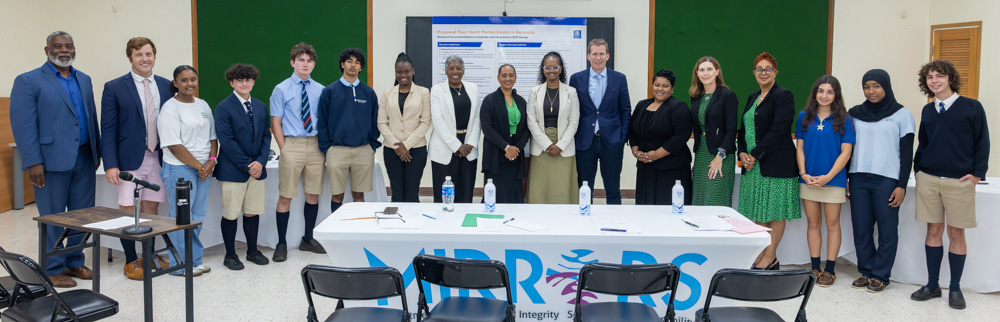
The recent Youth Mental Health Student Debate showed why these conversations are so important. Students debated the motion: “This House believes that a child’s right to privacy when accessing health services outweighs a parent’s right to be informed.” The debate was hosted by the Ministry of Youth, Social Development and Seniors on May 11, 2026, as part of the Ministry of Health’s Mental Health Anti-Stigma Month campaign and was organised by the Youth Advisory Working Group and Mirrors.
That motion raised real questions about trust, safety, parental responsibility, and confidentiality. The value of that debate was not that every person agreed. The value was that young people were trusted to engage a complex issue in public.
That is leadership.
The Youth Advisory Board has also raised concerns about barriers to care, including consent requirements, confidentiality practices, stigma, cost, and limited awareness of available support.
A young person should not have to navigate confusion, fear, or silence before getting help.
Parents and guardians remain central to this work. The goal is to strengthen families so they can have better conversations. Many parents want to help but do not always know what signs to look for, what language to use, or where to turn when their child begins to struggle.
Mental health literacy like the Youth Mental Health Training Programme must therefore become part of how Bermuda supports households. Local research found that many adolescents could not recognise depression or social anxiety when it was described to them. If young people themselves may not always have the language for what they are experiencing, then parents, guardians, teachers, coaches, youth workers, faith leaders, and other trusted adults need practical tools to notice early signs, respond calmly, and know where to refer a young person for help.
We must also be honest about stigma.
Too many young people still fear being labelled. Too many families still suffer in silence.
Government will continue doing its part. We will continue listening to young people, supporting policy reform, working across Ministries, strengthening access to care, and working with partners across the community. But this work also belongs to every parent, teacher, coach, faith leader, employer, neighbour, and community organisation that has influence in a young person’s life.
Bermuda’s young people are speaking.
We must build the kind of support that helps young people feel safe enough to ask for help before they are in crisis.
That is how we protect their dignity.
That is how we protect their future.
- Tinee Furbert, Minister of Youth, Social Development and Seniors



Read More About
Category: All


