DPP Addresses Caribbean Court of Justice
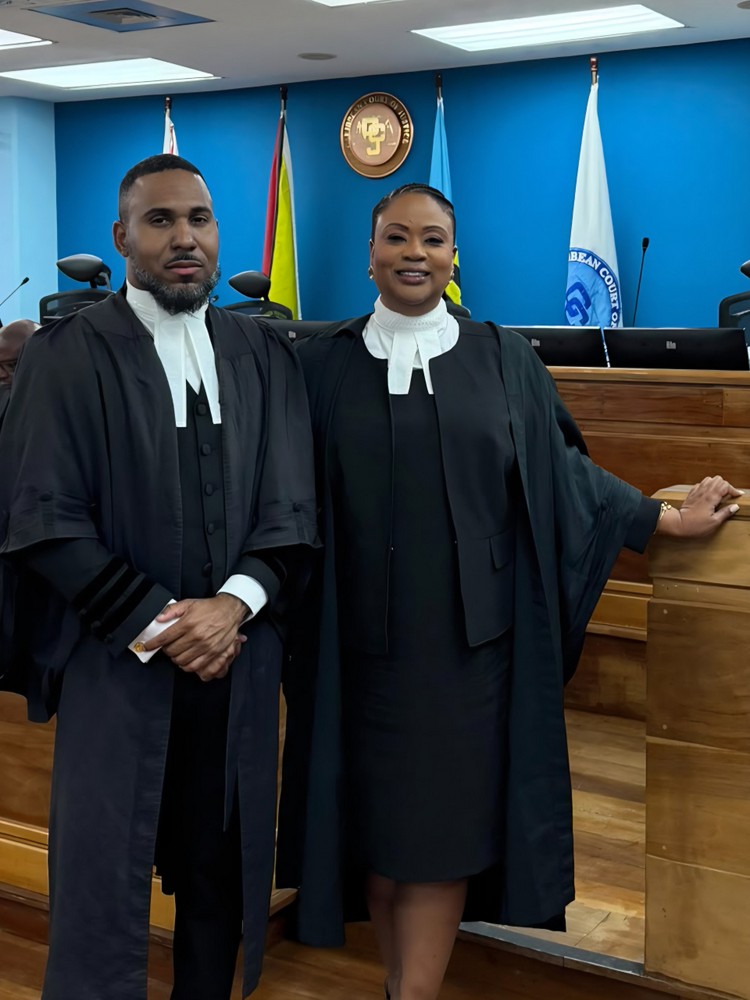
Director of Public Prosecutions Cindy Clarke addressed the Caribbean Court of Justice in Trinidad & Tobago, becoming the first Bermudian to address the Court.
A spokesperson said, “The Director of Public Prosecutions for Bermuda, Ms. Cindy E. Clarke, recently addressed the Caribbean Court of Justice [CCJ], appearing before the Court at its seat in Port of Spain, Trinidad and Tobago, on 23 July 2026. Ms. Clarke appeared together with Acting Deputy Director Adley G. Duncan, with Crown Counsel Denzelle Swan also attending and assisting the Bermuda team.
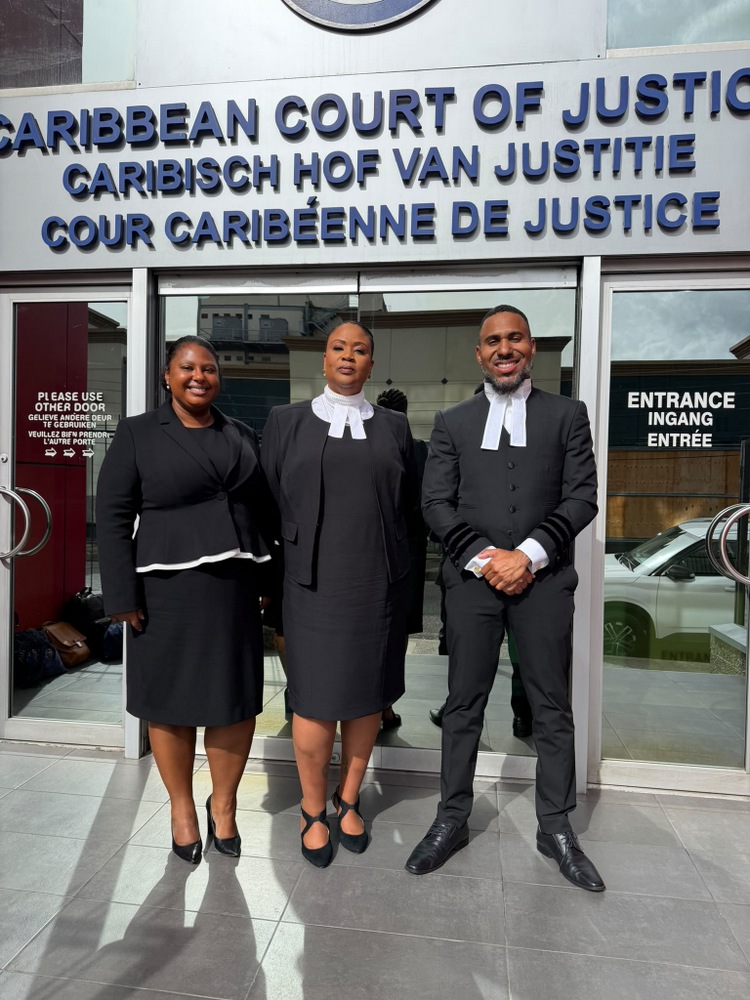
“The appearance arose in the Guyanese criminal appeal of Wazir Ali v Director of Public Prosecutions, CCJ Appeal No. GYCR2026/001, in which the CCJ invited amici curiae: friends of the Court, to provide specialist assistance on the common law doctrine of ‘recent complaint’, including the extent to which reforms abolishing or modifying the doctrine have been effective across Commonwealth jurisdictions.
“The Caribbean Court of Justice is one of the Caribbean region’s most significant judicial institutions. In its appellate jurisdiction, it serves as the final court of appeal for those CARICOM states that have adopted that jurisdiction, performing the role otherwise exercised by the Judicial Committee of the Privy Council.
“The invitation allowed Bermuda to contribute its particular experience because Bermuda abolished the doctrine of recent complaint by statute in 1994, three decades ago. The Bermuda submissions examined both the historical origins of the doctrine and the practical effect of its abolition, while providing the Court with a comparative perspective from jurisdictions where the doctrine has been retained.
“The Bermuda team submitted that the doctrine developed from historic assumptions about how victims of sexual offences, predominantly women, were expected to behave following an assault. Its origins included the ancient expectation that a woman alleging rape should promptly raise a “hue and cry”, and the doctrine ultimately became connected with assumptions that sexual complainants required special scrutiny not imposed upon victims of other forms of personal violence.
“Bermuda’s submissions emphasised that there is no single or universally expected way in which a victim of sexual violence will respond or disclose what has happened. Fear, shame, trauma, embarrassment, confusion, power imbalances and other circumstances may all affect when, how, or whether a victim makes a disclosure. Delay alone should therefore not be treated as evidence that an allegation is untruthful.
“The Bermuda team submitted that the practical experience following reform has been positive: reducing unnecessary legal argument, simplifying directions to juries, avoiding the need to call witnesses solely to satisfy the technical requirements of the former doctrine, and allowing the criminal justice process to treat complainants with greater dignity while preserving fairness to an accused person.
“The submissions ultimately invited consideration of recent complaint not simply as a technical rule of evidence, but as an issue engaging equality, dignity, trauma-informed adjudication and constitutional fairness, and argued that Bermuda’s experience demonstrates how reform can contribute to a fairer trial process.
“Ms. Clarke’s appearance marks an important milestone for Bermuda and its legal profession: placing Bermuda’s legal experience and jurisprudence before one of the Caribbean region’s highest judicial bodies.”
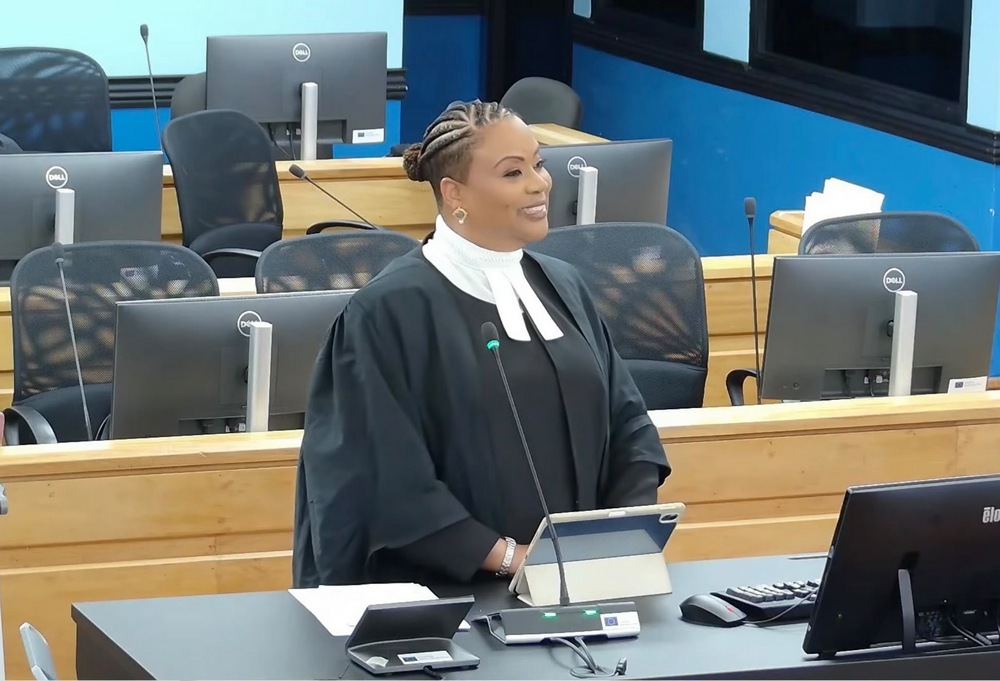
Ms. Clarke said, “It was an extraordinary honour to stand before the Caribbean Court of Justice and to do so as the first Bermudian to address the Court. I regard that distinction not simply as a personal achievement, but as an achievement for Bermuda, for our legal profession and for the Department of Public Prosecutions.
“Bermuda is a small jurisdiction, but we have a mature legal system and valuable experience to contribute to the development of Commonwealth and Caribbean jurisprudence. In 1993, Bermuda took the progressive step of removing from our law a doctrine rooted in outdated assumptions about victims of sexual violence. More than thirty years later, we were privileged to place that experience before the CCJ as it considers an issue of importance to the administration of justice throughout the region.
“I was particularly proud to appear with Acting Deputy DPP Adley Duncan and to have Crown Counsel Denzelle Swan assisting our team. This was an opportunity not only to represent Bermuda, but to demonstrate the quality, depth and capability of the lawyers within Bermuda’s Department of Public Prosecutions.”
“Although Bermuda is not itself within the CCJ’s appellate jurisdiction, its invitation to assist as amicus curiae reflects the jurisdiction’s growing contribution to regional and international legal dialogue and allowed Bermuda’s experience of reform to inform a significant question of Commonwealth criminal law.”